Musings on the Most Ridiculous Band I Can't Stop Listening To

Category: Uncategorized (Page 271 of 1031)

Bitcoin: An FAQ

What is Bitcoin?

Oh, no. I don’t wanna talk about Bitcoin and you can’t make me.

Please help me. I’ve invested my life savings.

And you didn’t know what it was?

I did some research on Reddit, but it turns out it wasn’t enough.

I’m shocked. I don’t wanna talk about this bullshit.

What if I gave you a Bitcoin?

Ooh, okay. Start over.

What is Bitcoin?

Bitcoin is the first post-modern currency.

That sounds like nonsense.

It does, but it won’t when we circle back to it later. First things first: define “money.”

A governmentally-issued token of discrete value that can be traded for goods or services.

Right. Bitcoin’s none of those things.

So how is it money?

Because it’s worth something.

Why?

For the same reason money’s always been valuable. When did humans invent money?

I’m supposed to ask the questions.

I’m supposed to be a billionaire with laser nipples, but life blows. When did humans invent money?

1492?

About 10,000 BC. Right around the same time as agriculture and animal domestication. Once you go from a self-sufficient small band of hunter-gatherers to a larger and more spread-out group of farmers and herders, you need money. Forget cities. We haven’t invented cities yet. But these farmers and herders had Market Day. You can’t run Market Day on the barter system.

Okay.

And you also had to figure out how to mine. Money is based on metal. They’re inextricably linked. That’s why both words begin with an “m.”

I don’t think it is.

And most of the metal was silver and gold. Copper and bronze, too, but those substances have uses. You could make cutlery and (shitty) weapons from copper and bronze, but silver and gold were too soft to work into tools. Also: silver and gold were rather shiny.

So?

Primates prefer shiny objects to dull ones.

Fish, too.

Yes, but we’re not discussing Floundercoin.

Is there a Floundercoin?

There was. It crashed this morning.

Can we get back to the main topic?

Sure. So: the useless, pretty metal is declared to be valuable. This weight of silver would get you this, that weight of gold could buy that. This currency has no levels of abstraction: the token’s value is the token itself. There’s a 1-to-1 relationship between what the physical object represents and what it manifests.

I gotcha.

The thing is the thing.

I said “I gotcha.”

This is where governments come into the story.

They’re always doing that.

Technically, they were governments. This is way back, so we’re really talking about the local rich asshole with all the murderer on his payroll.

Life was so different back then.

We have our concept: certain tokens can be exchanged for goods and services. We have our materials: silver and gold, and other precious metals. Now we need a mode and a moderator, and the local rich asshole stepped in to fill the role. Money can’t be irregularly shaped and random; you’d have to weigh it during every transaction, plus it would be too easy to slice a little bit off. No: currency needed to be standardized, and thus we have the coin. That’s the mode.

And the moderator?

The local rich asshole reserved the right to make the coins, and he also told everyone how much they were worth. Plus he almost always put his face on them.

This is the divine right of kings. It is as God hath commanded.

Verily. And that system worked well for a time, except for the fact that coins are a pain in the ass, and get heavy quick. The Chinese invented paper money, because the Chinese invented everything, but the Europeans picked it up and ran it through the industrial revolution and pretty soon the whole world was using banknotes.

What are banknotes?

Dollar dollar bills, y’all. The government (acting under the auspices of a central bank) collects all the silver and gold and issues the citizens receipts. You’re supposed to be able to trade in, say, a tenner for the equivalent amount of metal.

Did anyone ever do that?

I’m sure. But mostly, people just traded the bills with each other just as they had the coins. This is the first-level abstraction: you no longer had possession of the token, you had a note promising you title to the token if you asked for it. The silver, the gold, they are still present in the transaction, if not physically. There were giant stores of silver and gold bars held by the issuer of your currency, and you owned a certain weight, represented by your cash, and when you bought a cup of coffee with a single, then–legally if not tangibly–one dollar’s worth of gold in Fort Knox would cease being yours and become the coffee seller’s.

This is starting to sound like magic.

Wait until we abandon silver and gold.

What now?

Well, this is in America. We went from basing the greenback on silver and gold to just gold. William Jennings Bryan was pissed about it. That was the late 1800’s. Then, in ’72, Nixon took us off the gold standard.

Bastard.

This is the second-level of abstraction. The material, which had previously held value, no longer did: the receipt for your share of the material now held the value of the material itself.

Are you positive drug-addicted philosophers didn’t come up with all of this?

No. You know what else happened in the 1970’s?

The overthrow of the studio system and the rise of the Hollywood blockbuster?

Computers. And they kept happening. Whether you wanted them to, or not. And this brings us to our third-level of abstraction, which is the abandonment of physicality. A peculiar string of electrical impulses now referenced the banknote that used to promise the silver or gold, but now did not. There is, now, nowhere even close to enough paper currency to cover the amount in trade over wi-fi and through cross-ocean cables. The money is now the money because it is money.

So how does that explain Bitcoin being the first post-modern currency?

Bitcoin flaunted its worthlessness. It’s backed by no gunships or central banks. You can barely use it, unless you’re buying slaves or heroin. It could disappear tomorrow, but so could the dollar. Sometimes, countries wake up and the money isn’t worth anything anymore. Bitcoin told you right upfront it was a delusion.

I’m going to lose my life saving, aren’t I?

Oh, yeah.

All Of My Friends

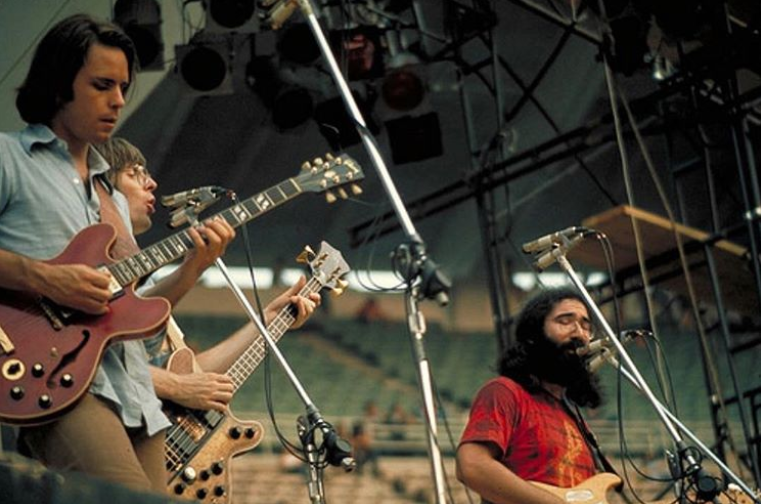
The handsome guy in the middle was John Fitzgerald Kennedy, Jr., and he would have been looking at his 60th birthday were he alive. Probably would have been president, if he hadn’t driven off any bridges. When he was a teenager, he was a little asshole, so his mother sent him out to the Bar-Cross Ranch for the summer. Just like another teenage asshole we know. Sometimes, boys need some coaching up. Barlow put ’em all to work. Always work to do on the ranch.

The blonde was his wife, Carolyn Besette-Kennedy. She was in the airplane that Junior didn’t quite know how to fly.

If you told John Perry Barlow that famous people were talking about computers, he would say to you, “Let me get my neckerchief.”

Regardless of its Swiss birth, LSD is an American drug, which means there is an East Coast history and a West Coast history.

Timothy Leary was a psychologist and teacher at Harvard. He and a man named Richard Alpert had access to psychedelics and a house so fancy it had a name. The men were academics, so they started an academic journal. They wrote at length about the soul. There were retreats. Meditation. O, the lectures. They took their psychedelics pseriously. Richard Alpert, who was from Newton, Massachusetts, even adopted a Holy Foreign Name, which is the ultimate White Guy On Acid move.

Out West, a redneck novelist stole a shitload of Goofy Juice from the CIA and bought a school bus, which he and his friends used to bother people all across the country. There were no retreats on the West Coast; the West Coast went furthur. There were parties, where famous journalists were lied to, and there was a house band.

Everybody got busted just the same, though.

John Perry Barlow knew Bill S. Preston, Esquire.

(Before anyone starts piping up in the Comment Section about one of the randos is a famous tech billionaire: I don’t care. Fuck all of ’em.)

Hey, don’t judge: I’m sure some of your friends have committed treason, too.

This one, you may judge. You may judge the shit out of this bullshit.

The white-haired fellow on the left is Daniel Ellsberg. Nixon tried to have him assassinated a few times, but Nixon tried to have everyone assassinated a few times. The guy next to JPB is Joan Cusack’s brother.

Listen, this is gonna come out racist, but I don’t give a shit: is that woman wearing native garb? And if so: did Santana force her to?

“Put on your native garb.”

“I was just gonna wear my jeans, Carl–”

SLAPITO!

“Never deny Santana!”

And so on.

All the computer nerds and freedom fetishists have tried to claim Barlow today, but fuck ’em. He’s ours. He was ours first.

Fourteen Thoughts On John Perry Barlow

ONE

He died in his sleep, because men who live morally get to die in their sleep.

That’s not true at all.

TWO

John Perry Barlow was born in 1947, to Mormons. The West is full of Mormons, and Wyoming is in the West, and the Bar Cross Ranch is in Wyoming. You grow things on a farm, but you raise things on a ranch. The Barlows raised cattle. John Perry Barlow was a cowboy. He was first educated in a one-room schoolhouse, because you cannot tell a cowboy story without a one-room schoolhouse, and then his parents sent him off to a prep school in Colorado. There, he met a skinny kid named Bobby.

THREE

My father went that way, too. Sick, sick, sick, and then he woke up dead, having been no better or worse the night before.

I wonder if it happens during a dream.

FOUR

The skinny kid, Bobby, comes out to the Bar Cross Ranch to spend the summer of 1963. He and Barlow ride horses, punch doggies, there are rope tricks involved. It’s the single most important summer in Bobby’s life; part of him is still there.

FIVE

John Perry Barlow wrote this, while drunk at a party in Switzerland, in 1996:

Governments of the Industrial World, you weary giants of flesh and steel, I come from Cyberspace, the new home of Mind. On behalf of the future, I ask you of the past to leave us alone. You are not welcome among us. You have no sovereignty where we gather.

The Governments of the Industrial World, upon reading John Perry Barlow’s words, chuckled and said, “You’re adorable,” and sent the Secret Police to computer classes.

Those are the opening lines to A Declaration of Independence of Cyberspace. Takes balls to write a Declaration, plus a certain social status. If you write a Declaration in a shack in the woods, then everyone’s going to call it a Manifesto.

SIX

The boy shows promise. Wesleyan, where he studies Comparative Religion and writes poetry and serves two terms as Student Body President. Spends his weekends sitting cross-legged in mansions with Tim Leary. Accepted to Harvard Law, and wins a book contract based on a few chapters of a novel. Turns down Harvard, takes the advance, fucks off to India, never turns in the book.

SEVEN

The doctors can keep you alive if you are willing to let them hurt you.

EIGHT

It is 1971. John Perry Barlow, who was born and raised in the West, in Wyoming, is living in New York City. He is dealing cocaine. He is shooting cocaine. He is armed, and almost certainly wearing his cowboy hat. The skinny kid from the ranch has joined a band, and they are playing right outside the city in Port Chester, at the Capitol Theater. No one in the band could write lyrics, at least not well, and so they had given the job to a poet the guitarist knew. At first, the arrangement worked, but then the skinny kid started coming up with songs and needed words, but he and the poet didn’t get along. The skinny kid and the poet had an argument backstage at one of the shows, and then the poet turned to the coke dealer in the cowboy hat, who’d been hanging around all week getting on everyone’s nerves, and said,

“You wrote poetry in college, right?”

John Perry Barlow said that he had.

“Great. He’s yours.”

And he was.

NINE

He was engaged to a woman named Cynthia Horner, who died in her sleep, too. She was 29, and on an airplane. Some people are born with broken hearts.

TEN

In 1972, John Perry Barlow went back to the ranch. His father was dying. He had been to Wesleyan, and Millbrook, and India and Europe and Africa, and New York City. Hollywood, too, but he went back to the West, back to Wyoming and the Bar-Cross Ranch, and that’s where he stayed for a good long while. Don’t get me wrong: JPB would jet off to Paris to hang out with Jackie Onassis on the weekends, but he spent most of his time punching them doggies.

ELEVEN

That the internet is a space ungovernable by fleshy authority, where one is guaranteed both inviolable anonymity and absolute freedom of speech, is not axiomatic. It is not mathematical. It’s precisely the view of the internet you might expect from a Wyoming rancher who identified politically–depending on who was asking–as Republican, libertarian, or anarchist.

I wonder what independence in cyberspace would have looked like to a city-dwelling socialist.

TWELVE

Well past the age when he should have known better, Barlow liked to punctuate his arguments by firing his pistol into the air (if he were outside) or into the floorboards (if he were inside). He still got invited to parties.

THIRTEEN

It would be a finer world had he been right about the internet.

FOURTEEN

There’s a band out on the highway. Everybody’s dancing.

Read This, Read This, Do This

Jennifer Finney Boylan in the New York Times comparing Basketball Head to Pepe LePew. Ms. Boylan’s pieces always disappoint me in a strange way that the Germans must have a word for: I read the Times to yell at it, not to enjoy it. When something appealing is published, it takes the fun out of it. Luckily, Ross Douthat is typing as we speak, so I’ll be back to full ire soon.

I did not know that the New Yorker‘s Nick Paumgarten was an Eagles fan when he called me a genius. I still accept his praise, and agree with it. Bonus points for living father. Generally, these pieces feature a dead dad and they’re unfuckingbearable: there is the obligatory scene at the grave; there is the required passed-down hat. No one needs any more “Thinkin’ about Dead Dad when [LONG-SUFFERING TEAM] wins” articles.

(You, Enthusiast, are in no danger of being presented with such an essay around these parts. While TotD does have the requisite dead father, we were Mets and Giants fans, and both of those teams have the courtesy to win championships every once in a while.)

Go google “ostrich + Philadelphia.”

Donald Trump’s Demands For His Military Parade

  • The most beautiful tanks.
  • Marvelous jeeps or whatever we got now, those big ones, get those.
  • The helmets with the pointy things.
  • When they do the thing with the guns, when they go from one shoulder to the other, with all the yelling, that thing, great.
  • No fat chicks except Huck.
  • AT-AT Walkers.
  • Horses that know tricks.
  • Tom Brady.
  • As many soldiers as we can get, looking fabulous, and they’ll march, everyone will be talking about it.
  • Marines, too.
  • And the other ones, water-soldiers, whatever they’re called: they march, too.
  • Only good blacks.
  • I wanna make Eric a colonel.

The Only Match Game In Town

Nice.

“Once they see the hair in person, they’re defenseless.”

Like the Super Bowl.

“Topical.”

I don’t see a wedding ring. Get in there, bro. Use some of those moves Bobby taught you.

“Wandering around looking for my reading glasses?”

The other move.

“Glaring into cameras?”

Okay, forget Bobby. Did Billy teach you any moves?

“Billy doesn’t have moves. He just takes it out and sprints at chicks.”

Does that work?

“If the girl doesn’t know how to juke, yeah.”

Trick is to watch the hips.

“Sure. Listen: I don’t need any help with ladies. I’ve been a Grateful Dead for 20 years.”

Sort of.

“Closest you can get. De facto.”

I’ll give you de facto. You are a de facto Grateful Dead.

“I mean, it’s not like the old days, but it ain’t that tough. It’s like shooting fish in a barrel. Oh, wait: that’s a move Billy taught me. See, he puts women in a barrel–”

Stop talking.

An Important Warning In Little Aleppo

The Tahitian was lit up. The marquee was blaring white and the lobby, too, broadcasting illuminance onto the sidewalk of the Main Drag. The full moon has nothing on a fully-operational movie theater. It was the end of the evening, and evenings did a magic trick in Little Aleppo: you’d blink your eyes and it would be night. Locals used to say it was like the sky pulled a rabbit out of its ass, until The Spectacular Gordon actually pulled a rabbit from his ass during his routine at the Magic Fortress. The sun going down was not like that at all, locals thought. Nothing was like that. (The Spectacular Gordon doubled his price after that show, as from then on, promoters would pay him extra not to do that particular trick.)

Augusta O. Incandescente-Ponui, whom everyone called Gussy, had been to the Magic Fortress years ago. Right after college with a guy she knew from college, some dipshitty fuck named Browner. That was his first name, and he was too tall. Gussy liked tall guys–everybody likes tall guys–but he was duck-beneath-doorways tall, clothing from specialty shops tall. But he had invitations from the Magic Fortress, and you needed an invitation to get in, and Gussy had been living under the building’s spooky-ooky glare all her life. It was a third of the way up Pulaski Peak, the tallest of the Segovian Hills, sprawled across half the west face of the slope. Grays and blacks and midnight blues, and eaves and gables and widow’s walks, and windows that didn’t connect to rooms, several Escherite columns, and an outbuilding you could’ve sworn was on the other side the last time you looked. There were the Hills, and there was what was on them; there was the land, and there were the marks upon the land. Harper Observatory up top, the Magic Fortress below. All her life, there they were. They existed just the same way that the moon did, or the harbor.

She was 23, and her father was dead; she was ambivalent about both of those facts. She felt way too old, and far too young; she loved her father, David O. Incandescente-Ponui, even though he was an asshole. It takes a lot to get a girl to stop loving her father, and he did not reach those depths. He was not wicked. Her bedroom door was never opened late at night. He was not physically violent towards her, or her brothers, or their mother. He was just an asshole. He never laughed, and he never listened to music, and called the people he loved “stupid” all time. He yelled and he sneered. He hated men for specific reasons, and women in general. But Gussy remembered him running behind her cheering the first time she pedaled her bike down the street without training wheels, this disconnected memory, and so she still loved him and missed him. Her father was dead and she was 23, and she floated through the neighborhood drinking too much, and smoking too much dope, and fucking all the wrong people.

Like Browner. Gussy wasn’t attracted to him, but she found his gorkiness fascinating. And was a bit of a size queen. She was rewarded in that assumption, but it took 20 minutes of sucking and licking and stroking to get him within spitting distance of erect; when Gussy heard that he came out of the closet several years later, she was happy for him, but mostly just vindicated. Relationships and love and all that were confusing, but I know how to suck and lick and stroke, Gussy thought. You’re not hard after my sucking and licking and stroking, well: that’s on you.

But they hadn’t fucked yet, they were still at the Magic Fortress. The lobby is unmanned but for a larger-than-life statue of Houdini with his hand extended as if to shake. The carpet is very busy, and there are bookshelves along the walls.

“Hello?”

“Anybody home?” Gussy said.

They looked around, and then at Houdini’s hand, and then each other, and then Gussy shook the statue’s hand. The bookshelf to their right swung open, revealing a maitre d’ in a tuxedo.

There was a dress code, and so everyone in the dining room was in suits, ties; dresses, heels. Gussy was in red, and Browner had a blue blazer with little gold buttons, the ones with anchors on them. Gussy tried her hardest not to make fun of them, and made it almost all the way to the entree. The food was beside the point. He was drinking bottles of Arrow beer, and she was drinking Lubyanka vodka with chocolate milk; she called it a Brown Russian.

“You gotta have one!”

“No. It sounds awful.”

“Brown Russian! Your name’s Browner! You gotta fucking have one!”

“I’m really okay.”

Browner was a pill, and Gussy began to tune him out after his reluctance to even try her delicious concoction, but she was still going to fuck him unless he called the waitress a cunt or said something really racist or whatever.

And then the shows. The Big Room had the big tricks, the ones that required a stage and setup and a pulchritudinous assistant wearing, for some reason, a bathing suit and high heels. The magicians made the women disappear. They sawed the women in half. Anyone could do magick, but magic was just for the boys. He threw a curtain up around her, and then she was wearing an evening gown, and the curtain went up again, and now she was in a spacesuit, and once more, and now she was wearing the same tuxedo as the magician. This got a laugh, for it was absurd. Gussy was bored. Just quick-change outfits. She did enough theater when she was at Harper College to not see the velcro seams and bulges.

She led Browner out of the Big Room, and at a table in the anteroom was an old man. The kind of old man they don’t make anymore: tiny and wizened and well-dressed. The Grand Imbrogliaro’s dusty evening coat had two sleeves, but only one of them was full; the right one was sewn tight to the side of the jacket and the cuff was in the pocket. He lost the arm in the Old Country. Which particular Old Country, the Grand Imbrogliaro would not say. He was not missing any hair at all, though it was stark white. There were two chairs on each side of the table, except for the side he occupied, and he smiled and invited Gussy and Browner to sit. They did, to his right.

“I need you to watch carefully,” he said.

He wasn’t holding a deck of cards–Gussy would swear to that–and then he was. His hand was bigger than Browner’s, and his fingers were muscled and long. Fresh manicure, the slightest crescent of edge above the pink plate. The pinky and the fourth finger hold the pack in place, and the thumb and first withdraw the cards, and then the empty pack is flicked across the table and the Grand Imbrogliaro blows a raspberry at it.

“Useless,” he said, and the cards flung themselves around his knuckles: they fanned out in a perfect circle, and then cascaded over one another trying to get back to their original position; he flashed their suits to Gussy and Browner, and then the backs–royal blue–and then they were in two piles, equal in number, and back again into one via an interriffling in which no corner caught corner, and then spread out in an equally-spaced line across the table’s green felt surface. Face down. The Grand Imbrogliaro smiled at the couple and his hand passed over the cards like he was giving benediction and SHWOP picked one from the line faster than you could see: it was the Two of Hearts, and he smiled at the couple again. There was a tip jar on the table.

He took the Two of Hearts and ran it along the line and the cards kicked in sequence like dancing girls, and now they were face up. The Two of Hearts is placed face down in front of Gussy, and he gathered up the rest of the deck in his great hand and FAMP slapped it down on the table. He pointed at Gussy’s card with all of his fingers, and said,

“Would you mind?”

She flipped the card. Seven of Clubs. He flipped the top card on the deck. Two of Hearts.

“You need to watch carefully.”

He handed Browner the deck.

“Shuffle. Please.”

He did, clumsily. The Grand Imbrogliaro could not help but wince. Browner placed the deck in front of him, and he shuffled it now, in his one hand, with his fingers working in unison and independently and in parallel. FAMP onto the green felt, and then he dealt the top four cards. All kings.

“Watch carefully.”

He took up the four kings and fanned them out and showed both sides of the cards, then laid them back down and showed the palm and back of his right hand. Gathered up the cards and threw them in an even line, face down, one above the other vertically. The palm, and the back of his hand. Then he flipped the cards face up. All queens.

“Things can change so quickly when you don’t pay attention. Were you paying attention?”

They protested that they were, and the Grand Imbrogliaro smiled.

“I’ll do it again. I’ll do it slower,” he said.

And he did. The shuffle, the pull, the fan, the spread, the palm, the toss, the reveal. He did the trick at half-speed, and Gussy and Browner bulged their eyeballs out at his hand and refrained from blinking.

“Did you see it?”

“No,” Gussy said. “Do it again.”

“How about even slower?”

His hand shifted in increments. His knuckles flexed and extended. The only impediment to his tempo was gravity; if only he could make the cards fall from his hand to the table less rapidly. And still: Queen queen queen queen.

“Even when you know it’s a trick,” the Grand Imbrogliaro said, “you still trust your eyes.”

The movie was playing in the auditorium, and Gussy lit a cigarette in her tidy office; there was an explosion, just pretend, but all the same it rocked the building that blared light onto the Main Drag, which had recently fallen into night. A Mustang, driven by a woman with an axe, was headed up into the Segovian Hills, past magic and onto magick, and a horse was, too, in the company of a boy with a rifle. Gussy didn’t know about either journey, just knew what was in front of her eyes, even though she had been warned against trusting them in Little Aleppo, which is a neighborhood in America.

« Older posts Newer posts »